
For many small business owners, payroll is one of those functions that quietly operates in the background—until something goes wrong. A missed paycheck, tax filing error, compliance issue, or frustrating payroll system can quickly become a business disruption that impacts employee trust, operations, and even retention. When these challenges begin to surface, it may be time to consider a mid-year payroll provider switch rather than waiting until the start of a new calendar year to make a change.
As businesses continue navigating rising compliance demands, workforce changes, and increasing technology expectations, payroll is no longer just an administrative task. It has become a strategic business function.
According to Thomson Reuters, payroll teams are facing “sharper regulatory pressure” as governments tighten reporting rules and organizations rely more heavily on payroll data for workforce insights and compliance management.
For small and growing businesses, this raises an important question:
Is your current payroll provider helping your business grow — or holding it back?
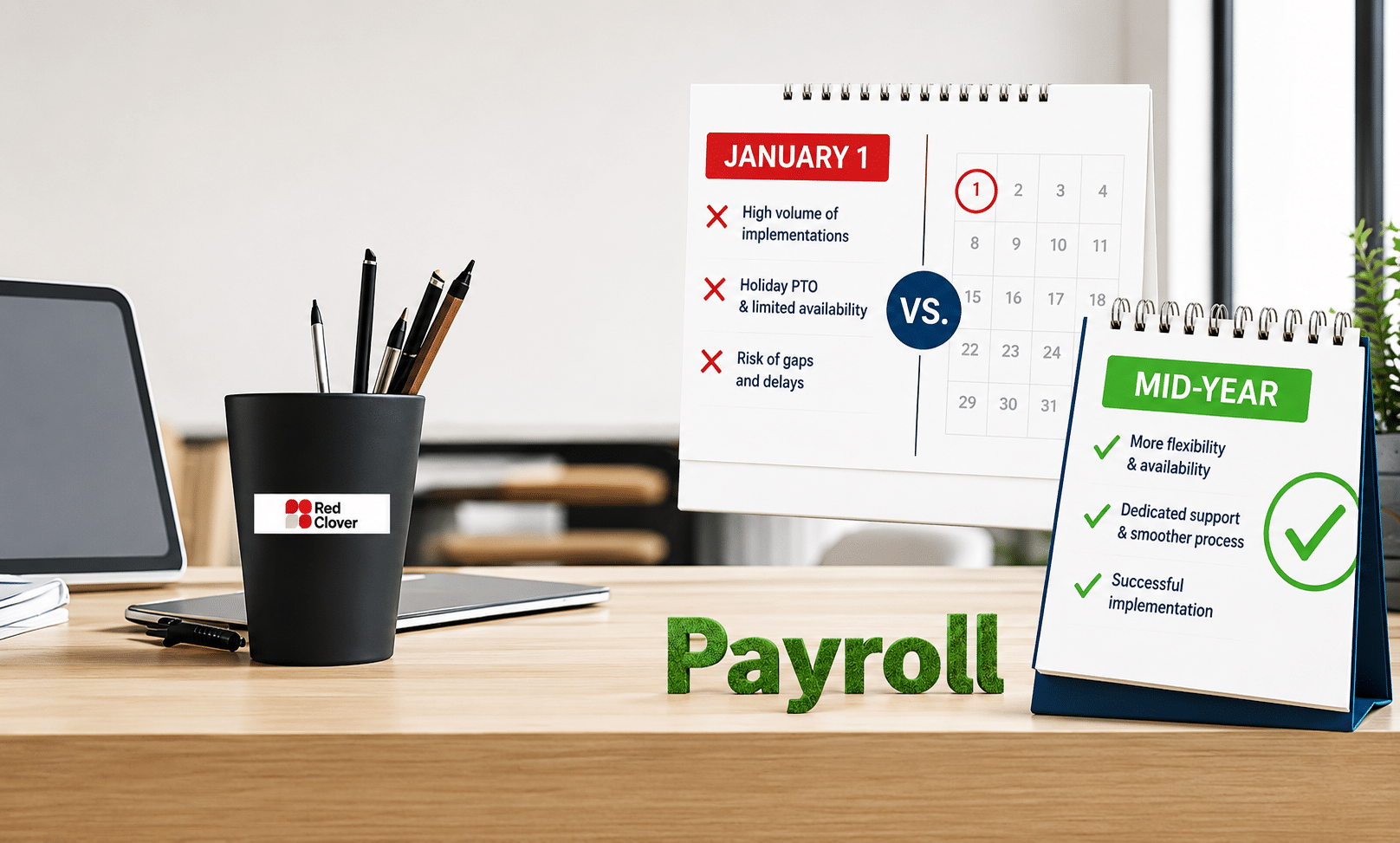
While many organizations view January 1 as the ideal time to switch payroll providers because it aligns with a new W-2 year, the reality is often more complicated. A January go-live may seem like a clean break, but it frequently creates unnecessary implementation challenges.
For one, payroll providers are managing a high volume of new client implementations at the same time, which can stretch resources thin. At the same time, key stakeholders—both within your organization and at your payroll provider—are often taking time off during the holiday season. This overlap can make it difficult to maintain momentum, resolve issues quickly, and complete critical final implementation steps before go-live.
Organizations that have experienced January 1 payroll conversions often encounter delays, communication gaps, or last-minute scrambles simply because the right people aren’t available when needed most. By contrast, a mid-year transition typically provides greater access to implementation resources, more focused support, and a less congested timeline, helping ensure a smoother and more successful payroll migration.
Why Payroll Has Become a Strategic Business Function
Payroll impacts far more than employee compensation. A strong payroll system supports employee trust, tax compliance, workforce planning, benefits administration, reporting accuracy, and overall operational efficiency. When payroll systems are outdated or disconnected, businesses often experience unnecessary administrative work, compliance concerns, and employee frustration.
Research highlighted in industry payroll reports shows that payroll errors directly affect employee wellbeing and retention. Delayed or inaccurate paychecks can damage employee trust and create financial stress for workers. As workforce expectations continue evolving, payroll is becoming a key part of the employee experience.
The Future of Payroll 2026 report also highlights growing investment in automation, AI-driven workflows, and integrated payroll systems. However, many organizations still struggle with fragmented systems and limited reporting capabilities. For small businesses, modern payroll technology is no longer simply a convenience — it has become an important operational and strategic asset.
Understanding Payroll Migration and What It Includes
Payroll migration is the process of transferring payroll operations, employee data, tax records, and reporting information from one provider to another. While many business owners assume a payroll migration will be complex, modern implementations are often more manageable than expected when properly planned and supported.
A payroll migration typically includes employee payroll history, pay rates, tax information, direct deposit details, benefits deductions, paid time off balances, and time-tracking records. For organizations using an integrated HRIS, the migration may also include employee files, onboarding documents, performance records, and other workforce data.
The primary goal is to ensure payroll continuity while improving efficiency, reporting, compliance, and the employee experience. Although much of the process is administrative, attention to detail is critical. Thorough testing and data validation help identify potential issues before go-live, reducing risk and ensuring a smooth transition.
Red Clover Workplace Voices: Buy vs. Build in Practice
Choosing a payroll provider involves far more than comparing pricing or software features. The right payroll partner should support operational efficiency, compliance management, employee experience, and long-term organizational growth.
Red Clover Workplace Voices — Senior Consultant Insight: Kate Dadetto
A great payroll provider for one company might not be the right fit for another. Choosing a payroll provider is a balance of pricing, features, user experience, reporting needs and integrations.
Reliable Support Matters More Than Most Businesses Realize
One of the most common frustrations businesses face with payroll vendors is slow or inconsistent customer support. Payroll issues often require immediate attention, especially when employee pay, tax filings, or compliance matters are involved.
When evaluating providers, businesses should look beyond software features and pricing to understand the support experience. Will you have a dedicated representative or account team that knows your business, or will questions be routed through a general call center where you speak with a different person each time? It’s also important to ask whether support is provided by in-house payroll experts or outsourced to an offshore call center. These factors can significantly affect response times, issue resolution, and the overall customer experience.
Integration Capabilities Can Eliminate Operational Headaches
Disconnected payroll systems frequently create duplicate work, reporting inconsistencies, and administrative inefficiencies. A strong payroll platform should integrate effectively with HR systems, time tracking software, accounting tools, and benefits administration platforms. The Future of Payroll 2026 report specifically identified integration challenges as a major concern for organizations trying to improve payroll operations and workforce reporting.
Compliance Support Should Never Be an Afterthought
Payroll compliance mistakes can become expensive quickly. Businesses should ensure payroll providers can support federal and state tax filings, wage and hour compliance, contractor classifications, and multi-state payroll requirements. As regulations continue evolving, organizations need payroll systems that help reduce compliance risks rather than increase them.
Payroll Data Should Deliver Business Insights
Payroll systems are becoming increasingly valuable sources of workforce and financial data. Organizations are now using payroll reporting to forecast labor costs, identify overtime trends, monitor compensation patterns, and support workforce planning initiatives. Payroll technology should help leadership teams make informed business decisions — not simply process payroll transactions.
Choose a Platform That Can Grow With Your Business
Many small businesses initially select payroll systems based only on immediate needs, but growth can quickly create new operational demands. Hiring expansion, multi-state operations, benefits complexity, and onboarding automation can all place additional pressure on payroll systems. Selecting a scalable payroll platform early can help businesses avoid another migration later.
How to Tell When It’s Time to Reevaluate Your Payroll Partner
As your business grows, your payroll needs evolve. What worked a few years ago may no longer provide the support, technology, or service your organization requires.
Here are some signs it may be time to reevaluate your payroll provider:
- Limited reporting capabilities
- Poor customer service
- Compliance concerns including appropriate handling of overtime pay and ERISA (aka if you have to check to make sure your 401k contributions are compliant and limits aren’t auto-set – it’s time for a change)
- Manual processes and spreadsheets to cover for integration issues
- Lack of employee self-service tools
- Increasing payroll complexity as the company grows
If payroll feels more reactive than strategic, it may be time to evaluate new options.
The Future of Payroll Is About More Than Processing Paychecks
Historically, payroll was viewed as a back-office function focused on processing paychecks and maintaining compliance. Today, payroll is increasingly recognized as a strategic business asset. Payroll data supports workforce planning, financial forecasting, employee retention, compliance management, and operational decision-making. As AI, automation, and workforce analytics continue to evolve, payroll systems are becoming more central to HR and business strategy. Organizations that invest in integrated, scalable payroll solutions today will be better positioned to adapt, grow, and meet the future demands of the workplace.
Final Thoughts: Payroll Decisions Impact Business Growth
Switching payroll providers may feel like a daunting process, but remaining with the wrong system can create ongoing operational, compliance, and employee experience challenges.
Mid-year transitions often provide businesses with the opportunity to stabilize payroll processes before year-end pressures intensify, while also improving efficiency, reporting, and employee trust.
Payroll is no longer simply about paying employees on time. It is about supporting the overall health, compliance, and growth of the organization.
For small businesses looking to scale effectively, choosing the right payroll partner can become a significant competitive advantage.
As technology and workforce expectations continue evolving, businesses that treat payroll as a strategic function — rather than an administrative obligation — will be better prepared for the future of work.